Showing posts with label Traditions. Show all posts

Sunday, 19 December 2010

Christmas Colours (London)

Shop keepers definitely know how to get their shops ready for Christmas. Every detail counts and the neatly arranged stock simply lures the passers by to go inside. I’m afraid the spell hasn’t worked on me – I was impressed, no doubt about that, but these days I’m glad to just seal all this up into an image and later on, when I’ve got time, to admire the creativeness and imagination that can make Christmas feel special again, just like it once was – in our childhood.

You could say that too much colours and glitter makes us forget what Christmas is all about. Well, if you’re only interested in stuffing your belly and getting some presents it certainly isn’t the right way, but if your festive ornaments are just the means to make this holiday the most special in the year, why not?


Monday, 15 November 2010

Lithuanian Village

I bet if I asked you to think of something exclusive the last thing that would come to your mind would be “village”. Can such word be used to describe a village? I think it can, especially if we talk about a REAL Lithuanian village.

When chicken and cows are kept in big farms and our vegetables are grown only in the huge fields, that go way beyond the horizon, it’s getting impossible to find a little family that would keep their own animals and grow their own crops on a small patch of land. Impossible to find people who would be proud of their hard work, who could lead a good life in a village and get enough income from their produce and wouldn’t need to drown their sorrows in alcohol. And so, something that used to be pretty standard is getting exclusive, rare.

This weekend I went to see some friends of ours, who have kept their roots on an old estate. I took some photos as I want to “freeze” in time a real Lithuanian village that sadly is dying off: giving in to the globalization, cracking at the threshold of the economic crisis, witnessing so many broken lives.

(Surnames on the old post box - only one of the four is still alive. Parents die and their children run away, flood the big cities looking for a better life.)

Everything’s run by a 75 year old lady. She gets some help by one of her daughters, who comes to visit every weekend and other relatives, who give a hand mainly in the summer.

We sat at a table covered in a white table cloth, had massive portions of potato pie, cooked on a real fire stove, and felt very welcome, probably just like the local priest, who comes for a special meal several times a year. The yard might not look very tidy, but everything’s done with care and love. That’s what Lithuanian village used to be like, that’s how we should strive to keep it.

I’m not afraid of hard work and keep dreaming that one day I will join some small community, where we can share our goods: swap eggs for fresh milk, give advice on growing carrots and beet root and always be there for each other in case something bad happens. I still believe it’s possible! To prove it I would gladly get rid of my city life and stay closer to nature and warmer people, who saying “Good Morning” actually mean it.
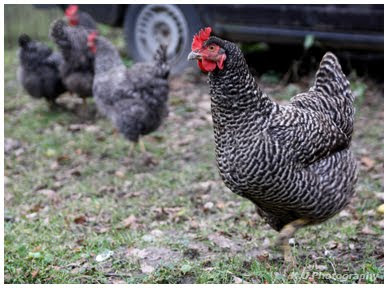
Hope you enjoy the photos and realise that sometimes even the dirty and smelly, old fashioned and ordinary can at the same time be very beautiful and dare.
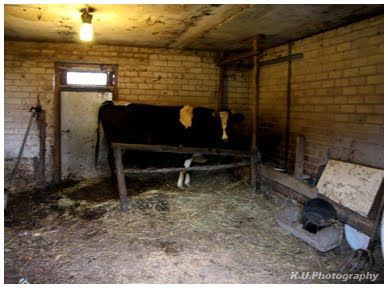


Friday, 5 November 2010

The Magnolia Project

I always thought that November is a month to slow down. It starts with the All Saints’ Day when we remember our dead relatives and friends by lighting candles on their graves and later on, after changing the clocks, the days just seem to get really short. The weather more and more often plays some nasty tricks - even if the Sun's shining in the morning, it doesn't mean that you won't get soaked in the afternoon (but as everything's done in the garden, there's no need to stay outdoors). So when it gets dark (every evening at about 5pm) or when it's raining (looks like every day) it seems like a good time to go into hibernation.

Well, I'd gladly shut myself at home and try to figure out what to start with, but there's work and other responsibilities... I moan a bit and carry on and it doesn't look like it's the right time to slow down. I can see myself being very busy till Christmas, which is good in a way - the more you do, the more gets done.


I'm carving pumpkins for the first time in my life for our also first ever Bonfire Night, knitting my own dog (how could I resist after seeing these cute things: http://dog-milk.com/best-in-show-knit-your-own-dog/?), planning my trip to London and playing with the latest obsessive idea - my Magnolia Project.

I love these trees. We've got a few in our garden, but I'd love to have even more. Greedy? You wouldn't think so after seeing their blooms in spring! At the moment they aren't a pretty sight - leafless sprigs, but I have found lots of orange seeds. After some research on the net I'm trying to follow the instructions:


Gather seeds from magnolia pods just before the pods open. Seeds will be covered with a reddish orange coating. Soak in tepid water for 24 hours to remove the coating. Remove from water and squeeze the pulp in your hands to force the glossy black seeds out of the pulp. Wash in warm water to remove any flesh or residue from the coating.

Plant your seeds to a depth of 1/2 inch in a tray of potting mixture of two parts peat moss, one part all-purpose potting soil and one part sand. Water thoroughly and cover the container with plastic wrap to maintain moisture.

This part is done. This is what remains:

Set in a warm location to germinate. Monitor closely. Keeping the soil evenly moist, but avoiding soggy soil. Open the plastic daily to provide air circulation and to stabilize moisture. Seedlings emerge in 4 to 6 weeks.

I hope they will emerge. As I would love to finish my project off with:

Removing the plastic wrap and placing seedlings in a sunny window. Planting in individual pots once seedlings have developed the second set of leaves. And planting outside in the spring after all danger of frost has passed.
----------------------------------------------

P.S. Photos of Magnolias for this post will appear as soon as (or better IF) the first seedlings appear.

P.P.S. I loved our first ever Bonfire Night. We've even got the neighbours wondering what all of this was about.

Saturday, 19 December 2009

Straw Decorations

Christmas must be the nicest holiday of the year as it‘s the time when everything seems so mysterious and special. We remember the old traditions and try to do things as they‘ve been done many years ago by our ancestors. We follow certain rituals and know that they have great meaning – for e.g. here in Lithuania on Christmas Eve on a white table cloth we put twelve dishes (as there were 12 disciples) and under the table cloth we put some straw (as Jesus was born in a stable). Although this holiday has been changed a lot by keen businessmen it’s nice to know that we haven’t forgotten what it’s all about.

I’d use every opportunity to learn something new about old ways and traditions, so last Wednesday I attended a lesson for everyone who wanted to try and make straw Christmas tree decorations, which have been very popular before the glittery bauble times.

It wasn’t very difficult and I enjoyed it a lot, but there’s a problem – these days it’s a big dilemma where to get straw. It has to be gathered in the summer: end of July, beginning of August; and if you don’t know any farmers… hmm… you’d need to pick some from someone’s fields. But if the idea of “scrumpping” doesn’t appeal I suppose you could use reeds instead.

Symmetry is very important, so all of the straws you will use have to be the same length, width and preferably colour (colour differs depending on the type of the straw (rye or wheat) and the are ways how to make it brighter – you have to boil your straw in water with baking soda).

You have to use a needle that would be longer than your straws, so that you could take it out at the other end. And the thread has to be similar colour to your straw, so that it wouldn’t be noticeable. (We as beginners got a bright orange one, so that it would be easier to untangle it if need be.)

The outcome: a rather complex symmetrical shape that, after decorating it with dried flowers, doesn’t look too bad.

On the other hand you’ve probably never seen traditional Lithuanian carcass shapes that are called "gardens". They are very complex and ornate, decorated with straw birds, garlands, dried flowers and berries. These are given as presents for newlyweds as a symbol of rich life (sorry I haven't got any photos, but if you are interested here's an example:
http://savaskampas.blogas.lt/uploads/r/Rutela/113928.jpg).

It is said that these “gardens” contain the idea of creating a perfect world, where “grapes are falling down”, in the middle “there flows a river” and in the trees “the birds are talking” (words from national songs). That’s why these straw “gardens" used to be a nice present – not only for decorating your home, but also for bringing you happiness.